
What is Genicular Artery Embolization (GAE)? A Patient Guide
Learn about GAE — a minimally invasive alternative to knee replacement surgery for chronic knee pain caused by osteoarthritis.
What is Genicular Artery Embolization?
Genicular Artery Embolization (GAE) is a groundbreaking minimally invasive procedure designed to reduce chronic knee pain caused by osteoarthritis. Unlike knee replacement surgery, GAE is performed through a tiny puncture in the skin and does not require general anesthesia, hospital stays, or lengthy recovery periods.
How GAE Works
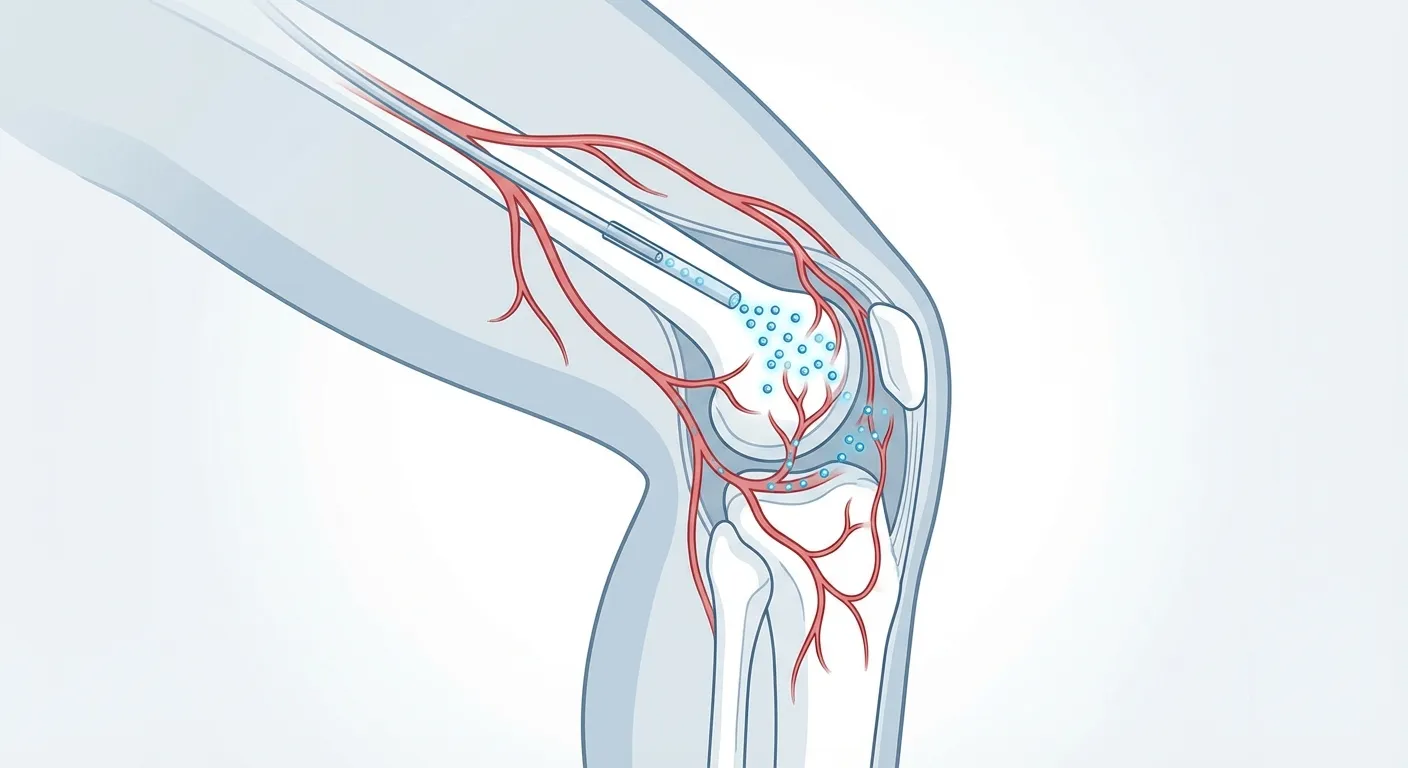
During the procedure, an interventional radiologist uses image guidance to navigate a thin catheter through the blood vessels to the genicular arteries — the small blood vessels that supply the knee joint. Microscopic particles are then injected to reduce blood flow to the areas of abnormal inflammation in the arthritic knee.
By targeting the inflammatory blood vessels, GAE reduces the chronic inflammation that causes pain, swelling, and stiffness — providing significant and lasting relief.
Who is a Candidate for GAE?
GAE may be right for you if:
- You have mild to moderate knee osteoarthritis
- Conservative treatments (physical therapy, corticosteroid injections, anti-inflammatory medications) haven’t provided lasting relief
- You want to avoid or delay knee replacement surgery
- You’re looking for a minimally invasive outpatient option
- You want to stay active without the 6-12 month recovery of knee replacement
What to Expect During the Procedure
- Duration: Approximately 1-2 hours
- Anesthesia: Conscious sedation (you’re awake but comfortable)
- Incision: A tiny nick in the skin at the wrist or groin — no stitches needed
- Recovery: Most patients go home the same day
- Return to activities: Within a few days for most patients
Benefits of GAE vs. Knee Replacement
- No general anesthesia
- No hospital stay
- No surgical incision
- Minimal recovery time (days vs. months)
- Preserves the natural knee joint
- Can be repeated if needed
- Lower risk of complications
Results
Clinical studies show that the majority of patients experience significant pain reduction within 1-3 months after GAE. Many patients report improved mobility, reduced swelling, and the ability to return to activities they had given up due to knee pain.
Schedule a GAE Consultation
At Vascular & Interventional Specialists, our board-certified interventional radiologists perform GAE at our outpatient clinics across the Midwest. Schedule a consultation or call (605) 217-5617 to find out if GAE is right for you.