
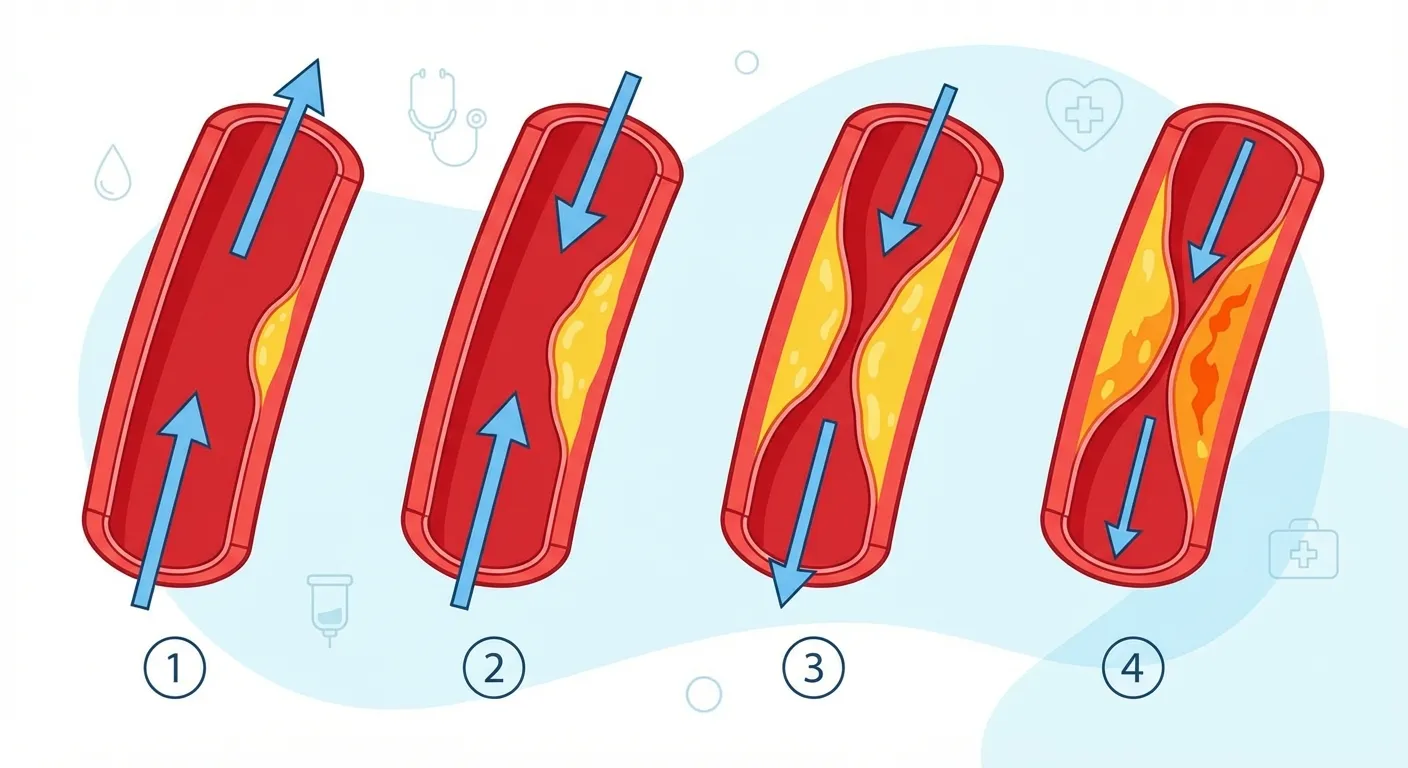
What Are the Four Stages of Peripheral Artery Disease?
Learn about What Are the Four Stages of Peripheral Artery Disease? at Vascular & Interventional Specialists. Expert vascular and interventional care acr...
Understanding the Four Stages of PAD
Peripheral Arterial Disease (PAD) is a progressive condition that worsens over time if left untreated. Understanding the stages can help you recognize when to seek treatment.
Stage 1: Asymptomatic
In the earliest stage, the arteries are beginning to narrow but you may not experience any symptoms. PAD at this stage is often detected during routine screening or when checking for other conditions. Risk factors like smoking, diabetes, and high blood pressure may be present.
Stage 2: Claudication
This is when most patients first notice symptoms. Intermittent claudication — pain, cramping, or fatigue in the legs during walking — is the hallmark of Stage 2 PAD. The discomfort typically occurs in the calves, thighs, or buttocks and goes away with rest.
- Stage 2a: Claudication occurs after walking more than 200 meters
- Stage 2b: Claudication occurs after walking less than 200 meters
Stage 3: Rest Pain
At this stage, reduced blood flow causes pain even at rest, particularly at night when lying down. You may notice:
- Burning or aching in the toes or forefoot
- Pain that improves when dangling the legs over the side of the bed
- Sleep disruption due to leg pain
This stage requires prompt medical attention.
Stage 4: Tissue Loss
The most advanced stage involves critical limb ischemia (CLI). Blood flow is so severely restricted that tissue begins to die, leading to:
- Non-healing wounds or ulcers on the feet or toes
- Gangrene (tissue death)
- Risk of amputation if not treated
Treatment at Every Stage
At Vascular & Interventional Specialists, we offer minimally invasive treatments for all stages of PAD:
- Angioplasty and stenting to open blocked arteries
- Atherectomy to remove plaque buildup
- Lifestyle modification support to slow disease progression
Early intervention is key. Schedule a screening or call (605) 217-5617.