
Stents in Legs: What Patients Need to Know About Peripheral Stenting
Learn about leg stents for PAD — how they work, what to expect, risks, benefits, and long-term outcomes from VIS interventional radiologists.
What Are Leg Stents?
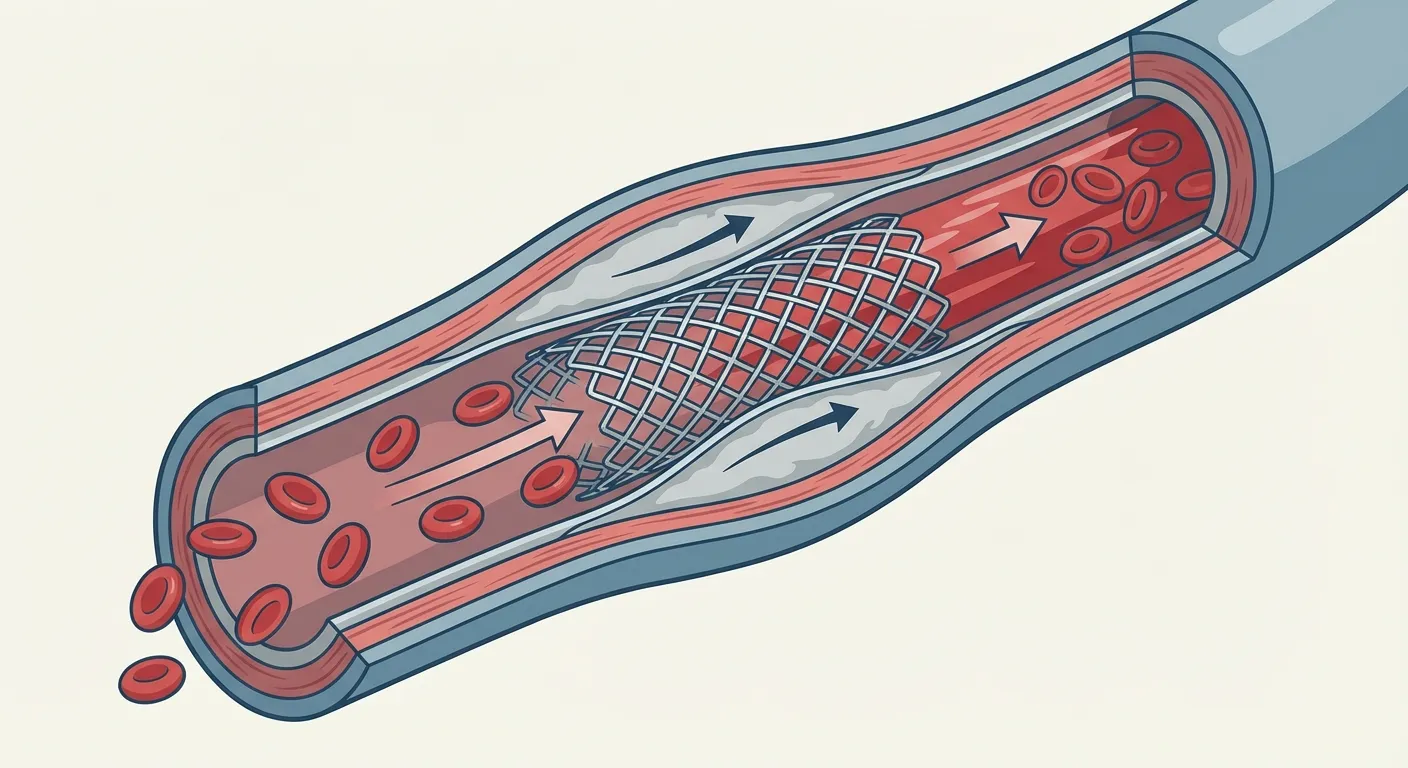
Leg stents are small, expandable mesh tubes placed inside narrowed or blocked arteries in the legs to restore blood flow. They are commonly used to treat Peripheral Arterial Disease (PAD), a condition where plaque buildup reduces blood flow to the limbs.
How Peripheral Stenting Works
The procedure is performed by an interventional radiologist using minimally invasive techniques:
- A small catheter is inserted through a puncture in the groin or wrist
- Using real-time X-ray guidance, the catheter is navigated to the blocked artery
- A balloon is inflated to open the narrowed area (angioplasty)
- A stent is placed to hold the artery open permanently
- The catheter is removed and a small bandage applied
The entire procedure typically takes 1-2 hours and is performed under local anesthesia with conscious sedation.
When Are Leg Stents Recommended?
Stenting may be recommended when:
- Lifestyle changes and medications haven’t adequately controlled PAD symptoms
- Claudication (leg pain when walking) significantly limits your daily activities
- There is a risk of tissue loss or amputation due to severe blockage
- Angioplasty alone isn’t sufficient to keep the artery open
Recovery After Leg Stenting
- Most patients go home the same day or the next morning
- Walking is encouraged within hours of the procedure
- Full recovery typically takes 1-2 weeks
- Blood-thinning medications may be prescribed to prevent clot formation
- Follow-up ultrasound appointments monitor stent patency
Long-Term Care
After stenting, maintaining vascular health is essential:
- Take prescribed medications consistently
- Stay physically active with regular walking
- Manage risk factors: quit smoking, control blood pressure and diabetes
- Attend follow-up appointments for stent monitoring