
Prostate Artery Embolization (PAE) vs. Surgery: What Patients Need to Know
Compare PAE to traditional prostate surgery for BPH. Learn about the minimally invasive alternative that preserves sexual function.
What is Prostate Artery Embolization?
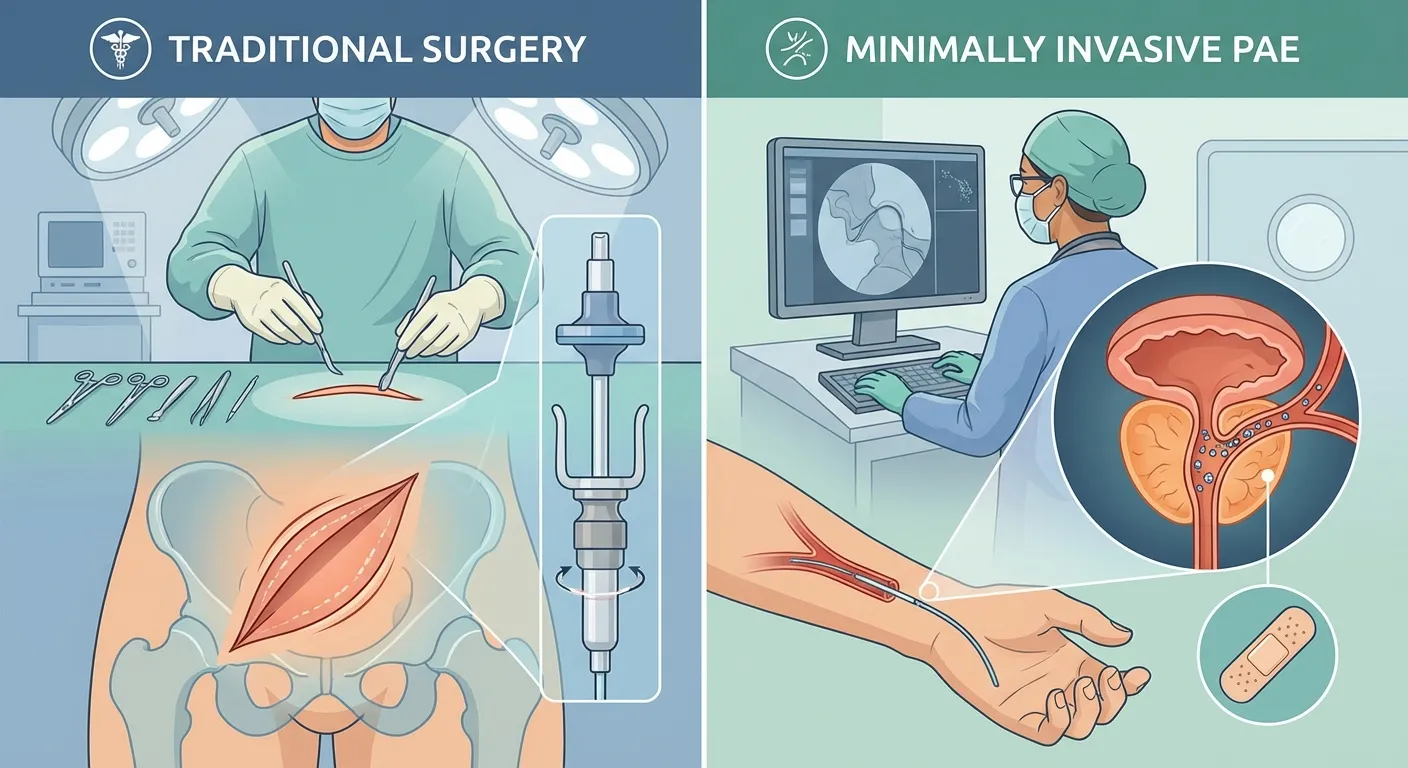
Prostate Artery Embolization (PAE) is a minimally invasive procedure that treats benign prostatic hyperplasia (BPH) — an enlarged prostate — by reducing blood flow to the prostate gland. This causes the prostate to shrink, relieving urinary symptoms without traditional surgery.
PAE vs. TURP Surgery: Side-by-Side Comparison
Procedure
- PAE: Catheter inserted through a tiny wrist or groin puncture; microscopic particles block prostate blood supply
- TURP: Surgical instrument inserted through the urethra to cut away prostate tissue
Anesthesia
- PAE: Local anesthesia with conscious sedation
- TURP: General or spinal anesthesia
Hospital Stay
- PAE: Same-day outpatient procedure — go home the same day
- TURP: Typically 1-3 days in the hospital with a catheter
Recovery
- PAE: Most patients return to normal activities within 3-5 days
- TURP: 4-6 weeks before full recovery; activity restrictions for several weeks
Sexual Function
- PAE: Preserves sexual function in the vast majority of patients
- TURP: Risk of retrograde ejaculation (up to 75% of patients)
Effectiveness
- PAE: Significant symptom improvement in 80-90% of patients
- TURP: Considered the gold standard with high success rates
Who Should Consider PAE?
PAE may be ideal if you:
- Want to avoid surgery and general anesthesia
- Are concerned about preserving sexual function
- Have a very large prostate (PAE works well on larger prostates)
- Have medical conditions that make surgery risky
- Want minimal downtime and quick recovery
Schedule a Consultation
Our interventional radiologists can help you determine whether PAE is the right treatment for your enlarged prostate. Contact us or call (605) 217-5617.