
Common Types of Aortic Disease Explained
Understand different types of aortic disease, symptoms, and treatment options.
Aortic Disease
Whether you live in Dakota Dunes, SD, Omaha, NE, Crystal Lake, IL, or Lee’s Summit, MO, we all share one thing in common: a hard-working artery called the aorta. You can think of your aorta as the main interstate highway of your body. It is the largest blood vessel you have, and its job is to carry oxygen-rich blood away from your heart to every other organ.
Because this vessel handles so much pressure and volume, it can sometimes develop issues that need a professional eye. At Vascular & Interventional Specialists, we believe that understanding the biology of your vascular system is the first step toward staying healthy. Here is a breakdown of the most common types of aortic disease we treat.
1. Abdominal Aortic Aneurysm (AAA)
This is probably the most well-known type of aortic disease. An aneurysm happens when a section of the aortic wall becomes weak and starts to bulge outward, almost like a worn-out spot on a garden hose.
While aneurysms can happen anywhere, they most commonly occur in the abdomen. The tricky part is that they usually don’t cause any symptoms until they become quite large. Our team uses clinical expertise and advanced imaging to monitor these bulges. If they reach a certain size, we use minimally invasive tools to reinforce the wall and prevent a rupture.
2. Thoracic Aortic Aneurysm (TAA)
This is very similar to an AAA, but it happens in the chest area, closer to the heart. Because the aorta in the chest is surrounded by vital structures like the lungs and esophagus, these require a very specialized level of care. Whether it is caused by high blood pressure, genetics, or just wear and tear, catching these early through regular screenings can be life-saving.
3. Aortic Dissection
A dissection is a more urgent clinical situation. This happens when the inner layer of the aortic wall develops a small tear. Blood then flows through that tear, causing the inner and middle layers of the aorta to separate (dissect).
This can happen suddenly and usually causes intense, sharp pain in the chest or back. It is a serious condition that requires immediate medical attention. Our Dakota Dunes, SD, Omaha, NE, Crystal Lake, IL, or Lee’s Summit, MO, specialists are trained in the latest interventional techniques to repair these tears and restore proper blood flow.
4. Aortic Occlusive Disease
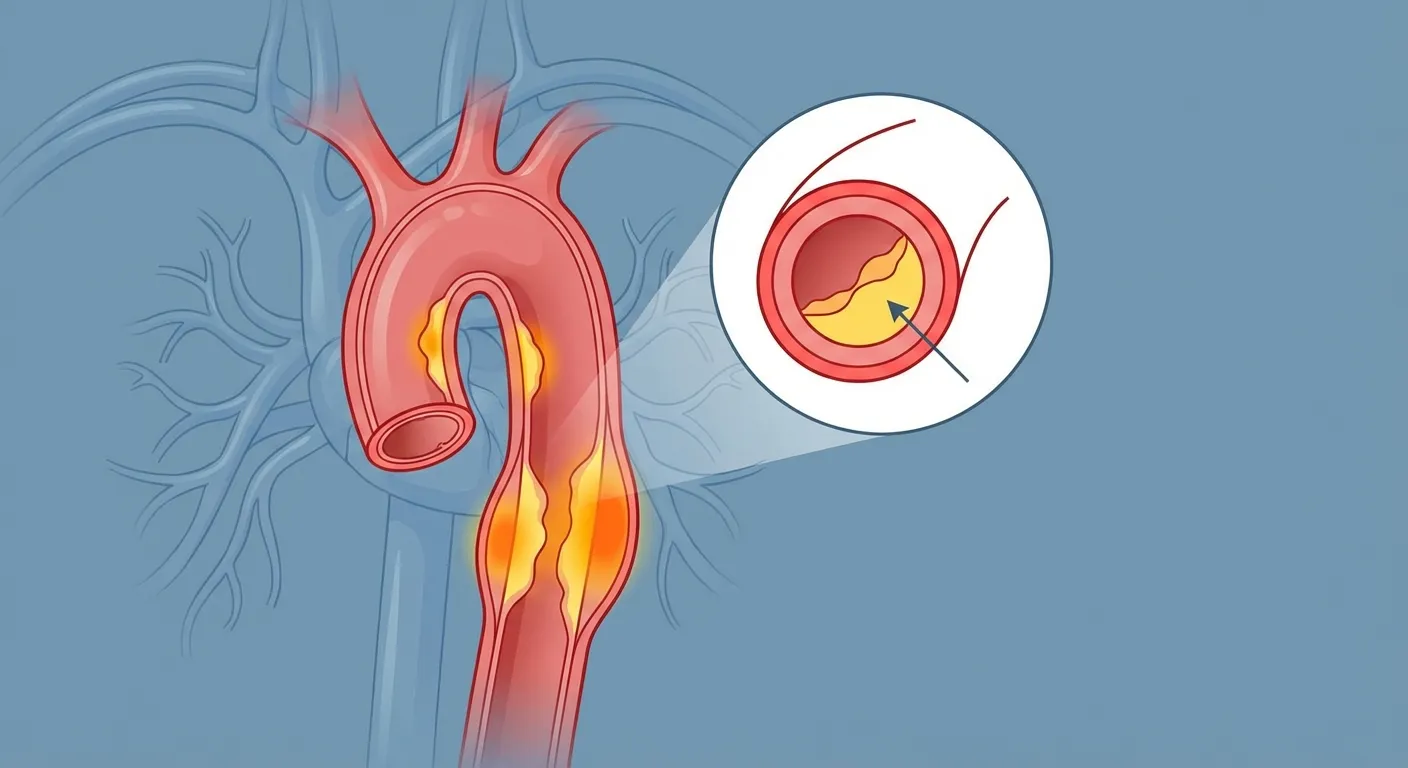
While aneurysms involve the vessel getting too wide, occlusive disease is the opposite: the vessel gets too narrow. This is usually caused by atherosclerosis, which is the buildup of plaque along the walls of the artery.
When the aorta or the main branches leading to your legs become blocked, you might experience pain while walking or a cold feeling in your feet. We focus on reopening those pathways using professional tools like stents or bypasses to get your circulation back on track.
Why Choose a Specialist for Your Aorta?
The aorta is the foundation of your circulatory system, so when things go wrong, you want a team that lives and breathes vascular health. At Vascular & Interventional Specialists, we provide a supportive and friendly environment across all our offices in South Dakota, Nebraska, Illinois, and Missouri.
We use a combination of high-tech diagnostics and minimally invasive treatments to manage aortic disease without always needing traditional open surgery. Every patient’s anatomy is a little different, and we take the time to build a plan that fits your spec